
In today's world, security and convenience go hand in hand. Whether you are safeguarding personal belongings, managing office storage, or securing specialized equipment, the need for reliable, hassle-free locks has never been greater. Among the many options available, combination cam locks stand out as a practical, secure, and flexible solution. Unlike traditional locks that rely on physical keys, these locks employ a numerical code to operate, offering keyless convenience without compromising on security.
Combination cam locks are compact, versatile, and highly adaptable. They are used across industries and environments, from residential furniture and lockers to industrial cabinets and mailboxes. By eliminating the need for keys, these locks not only simplify access management but also reduce the risk of unauthorized entry due to lost or duplicated keys. This article explores how combination cam locks work, their advantages, and practical considerations for users.
A combination cam lock is a mechanical locking mechanism that secures a compartment using a numeric code instead of a traditional key. At the heart of the lock is a cam—a flat, rotating metal piece situated at the back of the lock cylinder. When the correct combination is entered, the cam rotates, moving a bolt or latch to lock or unlock the compartment.
The lock's design is both simple and effective. The cylinder houses a series of tumblers or discs that interact with the cam. When the right combination aligns these components, the cam is free to rotate, operating the locking mechanism. This design ensures that the lock remains secure unless the correct sequence is entered.
Combination cam locks are particularly suited for environments where key management is cumbersome or unsafe. Examples include shared office spaces, public lockers, filing cabinets, vending machines, and equipment storage areas. They are compact, cost-effective, and adaptable, making them a preferred choice for both residential and commercial applications.
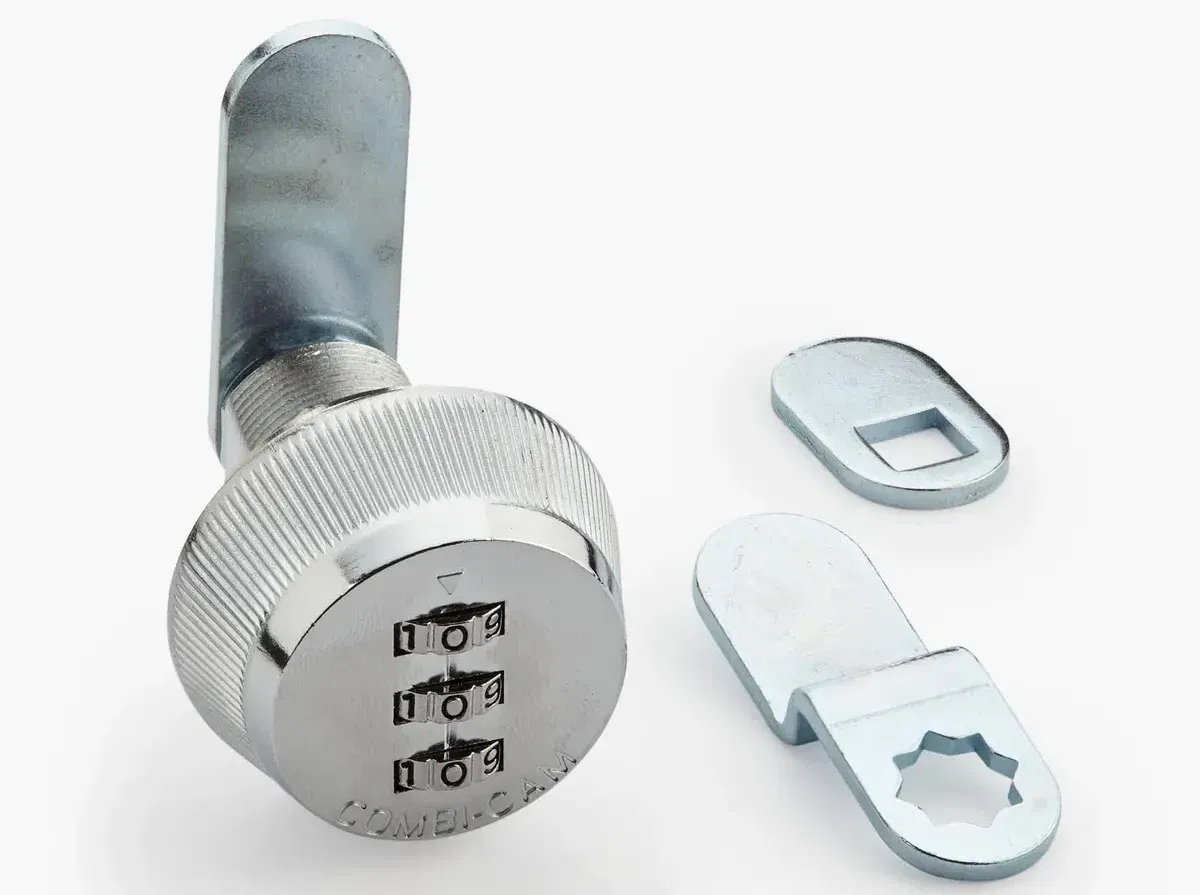
Understanding the internal mechanism of combination cam locks highlights their reliability and ease of use. The operation can be broken down into four key steps:
Users enter a specific numeric code using the lock’s dials. Typically, these dials range from 0–9, and the number of digits can vary depending on the lock model. Entering the correct sequence is essential for aligning the internal components.
Inside the lock, a series of tumblers or discs responds to the dial settings. When the correct combination is entered, these components align precisely with a locking pin or bar. Misalignment prevents the cam from moving, ensuring the lock cannot be opened without the proper code.
Once the tumblers align, the cam—a rotating flat metal piece at the back of the cylinder—is free to turn. The cam’s rotation engages with a bolt or latch mechanism that secures the compartment.
As the cam rotates, it either pushes the latch into the locked position or retracts it to unlock the compartment. This smooth mechanical action makes combination cam locks highly reliable for repeated daily use.
Combination cam locks offer numerous benefits over traditional keyed locks and even some electronic systems. Here are the most significant advantages:
One of the most obvious benefits is the elimination of keys. Users do not have to carry a physical key or worry about losing it. In multi-user environments, such as offices, gyms, or shared storage facilities, this advantage is particularly valuable. Access can be granted through the code alone, streamlining management and improving user experience.
For families, employees, or institutions, the convenience is clear. Children, elderly individuals, or staff members can easily operate the lock without needing to handle small keys. This reduces the risk of misplaced keys and the administrative burden of key replacement.
Combination cam locks are often more affordable than electronic locking systems. They do not require batteries, wiring, or software updates, which makes them economical over the long term. The construction materials—typically zinc, stainless steel, or brass—ensure durability and resistance to tampering.
Unlike traditional keyed locks, which may require frequent rekeying if a key is lost, combination cam locks avoid this recurring cost. Once installed, these locks provide reliable service for years with minimal maintenance.
Modern combination cam locks are designed for flexibility. Many models allow users to change the combination without professional assistance. This is particularly useful in shared environments where access control may need frequent updates.
For example, office administrators can easily update the combination when employees leave, ensuring security without replacing the lock entirely. The process is usually straightforward, involving a simple dial sequence or lever adjustment. This flexibility makes combination cam locks a practical solution for evolving security needs.
Although mechanical in nature, combination cam locks provide strong protection against unauthorized access. The internal alignment system ensures that only the correct combination can operate the cam. Additionally, some high-security models incorporate anti-tamper mechanisms, reinforced cam materials, and unique dial designs to resist picking or brute-force attempts.
Unlike simple keyed locks, which can be picked or duplicated, combination cam locks offer a controlled access environment where the security is tied to knowledge of the combination rather than possession of a physical key.
Combination cam locks are widely used across residential, commercial, and industrial sectors. Their compact design and keyless operation make them adaptable to many scenarios:
File cabinets, supply lockers, and personal storage units benefit from keyless access. Administrators can manage multiple users efficiently, and sensitive documents remain secure.
Combination cam locks are ideal for home mailboxes, small safes, and personal storage compartments. They provide a reliable security option without requiring multiple keys for family members.
Machinery compartments, control panels, and tool storage areas in factories or workshops often use combination cam locks to prevent unauthorized access. The durable construction withstands harsh environments.
Gyms, libraries, and schools frequently employ combination cam locks in lockers and storage units. The keyless design reduces administrative overhead and ensures that items remain secure even when users come and go frequently.
Vending machines, medical equipment cabinets, and transport containers also benefit from combination cam locks. The locks offer reliable security in environments where access control is essential, and keys may be impractical.
Choosing the right lock requires careful consideration of several factors:
Number of Digits: Locks can feature 2 to 5 digits or more. More digits increase security by making the combination harder to guess.
Material: High-quality metals like stainless steel or brass ensure durability, especially in harsh or outdoor environments.
Cam Type and Length: The shape and size of the cam must match the application. Some cams are straight, while others are offset or hook-shaped to engage specific latches.
Reset Options: Consider locks that allow easy combination changes to maintain security over time.
Environmental Resistance: For outdoor or industrial use, choose locks with corrosion resistance and weatherproof features.
By evaluating these factors, users can select a combination cam lock that meets both security and operational requirements.
While combination cam locks require minimal maintenance, certain practices help extend their lifespan:
Regular Cleaning: Dust and debris can accumulate on dials and inside the mechanism. Periodic cleaning ensures smooth operation.
Lubrication: A light, non-greasy lubricant can prevent the cam from sticking or corroding. Avoid over-lubrication, which may attract dirt.
Combination Management: Keep a secure record of combinations and update them periodically, especially in shared access environments.
Inspection: Check for signs of wear or tampering to ensure continued security.
By following these simple steps, users can maximize both security and longevity of their combination cam locks.
As security needs evolve, combination cam locks are also advancing. Some of the notable trends include:
Integration with Digital Systems: Hybrid locks combine mechanical combination cams with digital access systems, allowing logging and remote monitoring.
Advanced Anti-Tamper Designs: Enhanced internal mechanisms prevent manipulation attempts, increasing protection for sensitive environments.
Customization Options: Users can choose unique combinations, cam designs, or lock finishes to match specific applications or branding requirements.
Environmentally Resistant Materials: New alloys and coatings improve durability in extreme weather or corrosive industrial settings.
These trends ensure that combination cam locks remain relevant and secure in an era increasingly focused on both convenience and protection.
Combination cam locks offer a compelling balance of security, convenience, and cost-effectiveness. Their keyless operation eliminates the need for physical keys, while their durable construction ensures reliable performance over time. Easy reset options, flexible applications, and strong anti-tamper features make them suitable for residential, commercial, and industrial use.
Whether safeguarding office files, gym lockers, or personal storage compartments, combination cam locks provide a practical solution that combines efficiency with security. Their continued evolution and adaptability promise that they will remain a trusted option for secure access in diverse environments.
By understanding their mechanism, advantages, and applications, users can make informed choices that optimize security and usability. For anyone seeking a dependable, keyless locking solution, combination cam locks are a smart and versatile choice.