
In today's fast-moving world, personal and commercial storage systems are evolving rapidly, demanding higher levels of convenience, security, and digital integration. Traditional locking mechanisms—padlocks, keyed cam locks, and mechanical dials—have served reliably for decades, but they increasingly fall short in environments where quick access, multi-user management, audit control, and remote monitoring are essential. This shift has led to the accelerated adoption of digital combination cam locks, an emerging segment reshaping security in offices, schools, gyms, hospitals, and industrial facilities.
To fully understand the significance of digital cam locks, it is helpful to look at the foundation—the standard cam lock—and how its digital counterpart builds on and vastly enhances the original design.
Cam locks are one of the most widely used and versatile locking solutions across residential, commercial, and industrial settings. Favored for their simplicity, compact size, and affordability, a cam lock consists of two main components:
- The Barrel (Body): The cylindrical metal body, typically around 20mm long, extends through a panel or door.
- The Cam (Locking Arm): A rotating metal plate fixed to the rear of the barrel that turns to secure or release the door or drawer.
When the user rotates a key in the barrel, the cam rotates behind the fixed frame, either latching the door shut or releasing it. This uncomplicated mechanism makes cam locks a perfect choice for items such as:
- Lockers
- Filing cabinets
- Mailboxes
- Pedestal cabinets
- Toolboxes
- Industrial equipment panels
Because the barrel is threaded, nuts can be tightened to secure the lock to metal or wooden surfaces. The design is cost-effective but reliable, offering good security for general-purpose storage.
Combination cam locks remove the need for traditional keys and instead use a mechanical number wheel or dial. Users simply enter a numeric code to unlock the mechanism. These locks gained popularity in schools, personal lockers, employee storage areas, and small commercial applications because they eliminate key loss, reduce operational costs, and allow for simple user management.
However, while mechanical combination locks were a major improvement over key-based cam locks, the next evolutionary leap came with digital technology.
Digital combination cam locks are electronic locking systems that replace traditional mechanical cams with digitally controlled mechanisms. Instead of using a metal key or mechanical dial, users input numeric codes via a keypad, touchscreen, Bluetooth app, or RFID card.
At their core, digital cam locks still rely on a rotating cam for physical latching, but the unlocking action is triggered electronically. This introduces significantly more features and security controls compared to mechanical types:
- Keyless access using PIN codes, NFC, Bluetooth, or RFID
- Programmable multi-user operation
- Temporary or time-limited access codes
- Audit trails and usage logs (for advanced models)
- Low battery alerts and emergency access options
- Integration with centralized management systems
- Solid-state electronics for long life and stable performance
These features make digital cam locks ideal for industries that require fast, secure, and trackable access control.
The basic working principle involves a miniature electronic motor or solenoid inside the lock that moves the cam once the correct digital credential is entered. Here is the typical sequence:
- Credential Input – A user enters a PIN, scans a card, or uses a Bluetooth command.
- Verification – The lock's microprocessor compares the credential to stored access data.
- Actuation – If valid, an internal motor rotates or releases the cam.
- Unlocking – The door can now be opened.
- Auto-Relock – Many locks automatically relock after a set time.
Power usually comes from long-life lithium batteries (9–24 months on average), and many units include emergency micro-USB ports in case of total power loss.
To meet the needs of different industries, digital cam locks come in several configurations:
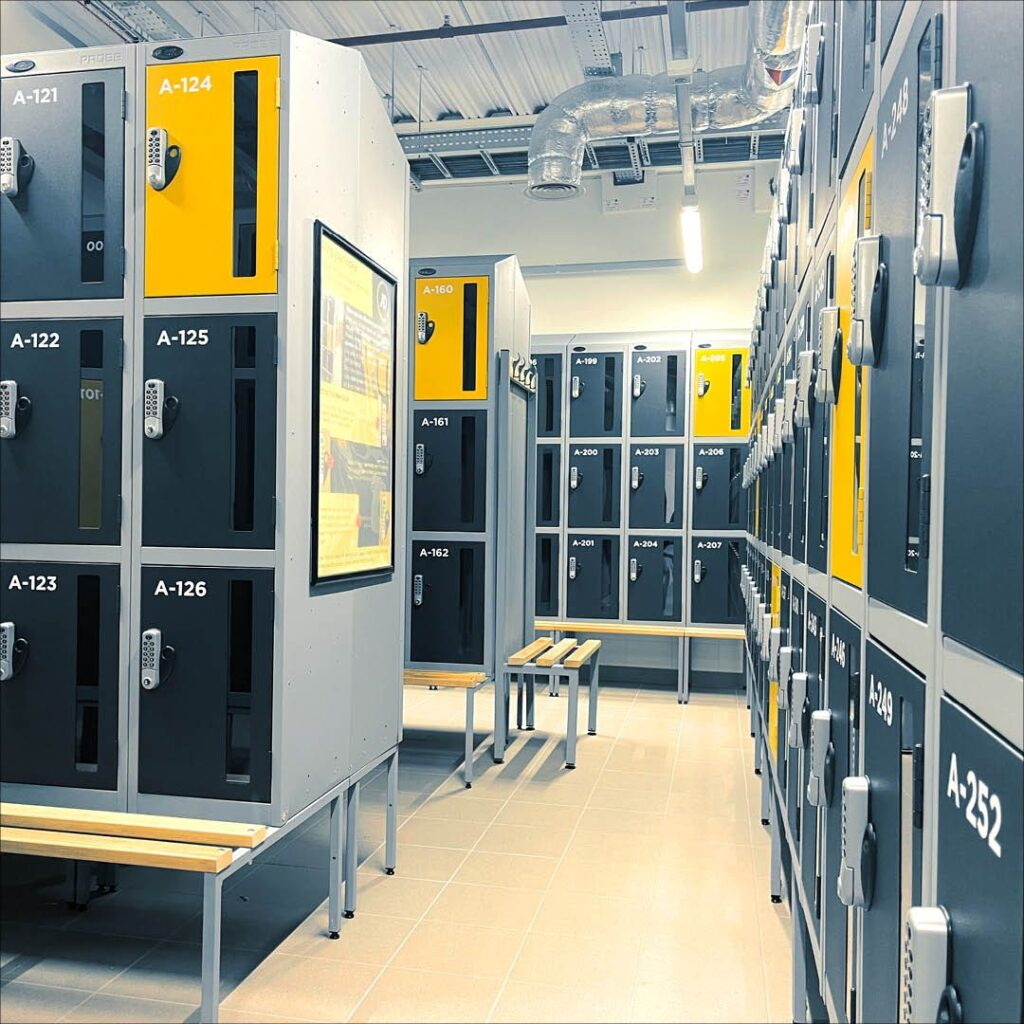
These are the most common type, featuring a physical or touch-sensitive keypad where users enter numeric codes.
Ideal for:
- Lockers
- Office furniture
- Schools
- Storage cabinets
Operate using contactless cards, wristbands, or NFC-enabled devices.
Ideal for:
- Gyms
- Hotels
- Hospitals
- Membership-based facilities
Users unlock cabinets using a smartphone app.
Features may include:
- Remote unlocking
- Access scheduling
- Usage logs
These versatile locks support multiple input methods, giving businesses maximum flexibility.
Connected to a cloud platform for centralized monitoring and control.
Best for large organizations needing enterprise-level security.
No more key duplication costs, lost keys, or lock replacements.
Advanced encryption, tamper detection, and audit logs significantly improve protection.
Dozens or hundreds of users can have unique codes or credentials.
Administrators can add, delete, or modify access instantly.
Remote monitoring, access scheduling, and analytics help optimize security operations.
Fewer mechanical parts mean less wear and longer lifespan.
Touchscreen or RFID operation is smoother and quicker than traditional locks.
IoT-enabled cam locks can connect to building automation platforms.
Used in:
- Filing cabinets
- Employee lockers
- Confidential document storage
Digital access enhances data security and complies with privacy regulations such as GDPR and HIPAA.
Used to secure:
- Medication cabinets
- Patient belongings
- Medical equipment drawers
Audit functions help track access and reduce theft.
Ideal for:
- Student lockers
- Laboratory storage
- IT equipment cabinets
Eliminates key management burdens for facility administrators.
RFID wristbands synchronize with membership systems, offering seamless user experiences.
Used for:
- Cash drawers
- Display cabinets
- Stockrooms
Digital locks help reduce shrinkage and improve employee accountability.
Protect:
- Tool cabinets
- Control panels
- Hazardous materials storage
High durability and programmable access support strict safety requirements.
The global market for digital locking systems is expanding rapidly, driven by:
Rising Demand for Smart Access Control
With digital transformation accelerating, businesses are upgrading from mechanical locks to digital systems.
Growth of IoT and Cloud-Based Security
Cloud-managed locks allow real-time monitoring, ideal for multi-location enterprises.
Shift Toward Touchless Technologies
RFID and mobile app unlocking reduces physical contact—popular post-pandemic.
Increasing Security Regulations
Industries such as healthcare, finance, and government require traceable, controlled access.
Expanding Smart Furniture Market
From smart lockers to automated storage cabinets, digital cam locks are becoming a standard feature.
Despite the benefits, several challenges remain:
Frequent use drains batteries faster.
Solution: Use long-life lithium batteries and low-power electronics.
Connectivity introduces potential vulnerabilities.
Solution: Use encryption, secure protocols, and update firmware regularly.
Digital locks cost more than mechanical ones.
However, businesses save money over time via reduced key management and higher security.
Older furniture or metal cabinets may require retrofitting.
Proper installation ensures long-term reliability and optimal security. Here are some expert guidelines:
Ensure the lock's barrel length suits the cabinet or door. Most digital cam locks support 1–20 mm panels.
The cam must align perfectly with the strike plate to avoid jamming or premature wear.
Continuous vibration can loosen mounting hardware or shorten the life of internal electronics.
Debris or metal shavings may interfere with rotation or keypad operation.
Offset, straight, and hooked cams serve different installation requirements.
Always test the lock on battery power before securing the mounting nut.
Most digital locks include:
- A master code
- USB emergency power port
- Mechanical override key
Ensure the lock uses the latest security patches and functionality updates.
Most locks provide low-battery notifications—never ignore them.
Dirt or moisture can reduce sensor sensitivity.
Tighten loose screws and lubricate cams lightly with non-conductive grease.
Checking audit trails can reveal unusual activity or potential security risks.
Digital cam locks will continue evolving with innovations such as:
AI-Enhanced Access Control
Predictive access patterns and anomaly detection.
Biometric Integration
Fingerprint or facial recognition on small cam lock modules.
Energy Harvesting Locks
Mechanisms powered by user interaction or ambient light.
Ultra-Low Power Electronics
Locks running for 5+ years on a single battery.
Full IoT Ecosystems
Real-time status reporting, automatic alerts, and cloud-based configuration.
The future points to smarter, more secure, and more connected access systems across every storage environment.
Digital combination cam locks represent a major technological advancement in access control for cabinets, lockers, and small storage systems. By combining the simplicity of traditional cam locks with the intelligence of digital systems, they offer unmatched convenience, flexibility, and security. Industries from healthcare to education, retail, fitness, and manufacturing are rapidly adopting these solutions due to their ability to streamline operations, reduce key management costs, and enhance protection of valuable assets.
As digital transformation continues sweeping across all sectors, digital cam locks will increasingly become the standard for secure, efficient, and future-ready storage management.
