
In the modern world, security has moved beyond mere physical barriers. As workplaces, industrial facilities, healthcare institutions, and residential complexes become increasingly sophisticated, the need for smart, reliable, and scalable access solutions has never been higher. Traditional mechanical locks, once a standard in security, are often inadequate for today's requirements. They are vulnerable to key duplication, human error, and operational inefficiencies.
RFID cam locks are emerging as a leading solution, combining the simplicity and durability of traditional cam locks with the intelligence and convenience of Radio Frequency Identification (RFID) technology. These devices provide keyless access, robust security, and seamless integration with digital management systems, transforming the way individuals and organizations manage access control.
This comprehensive article explores RFID cam locks in detail, covering their technology, types, applications, security features, installation, maintenance, industry trends, real-world case studies, regulatory considerations, and the future of intelligent access control.
An RFID cam lock is a locking device that integrates the traditional cam lock mechanism with RFID technology. The cam mechanism consists of a rotating metal plate that secures or releases a door, drawer, or cabinet. The RFID component allows for wireless authentication, enabling keyless entry through cards, fobs, or tags.
Unlike mechanical locks, which rely on physical keys, RFID cam locks rely on a digital credential system. Authorized users unlock the device by presenting a pre-programmed RFID tag. The lock's internal reader communicates with a microcontroller, validating the credential before activating the cam mechanism. This combination of mechanical reliability and digital intelligence ensures both security and convenience.
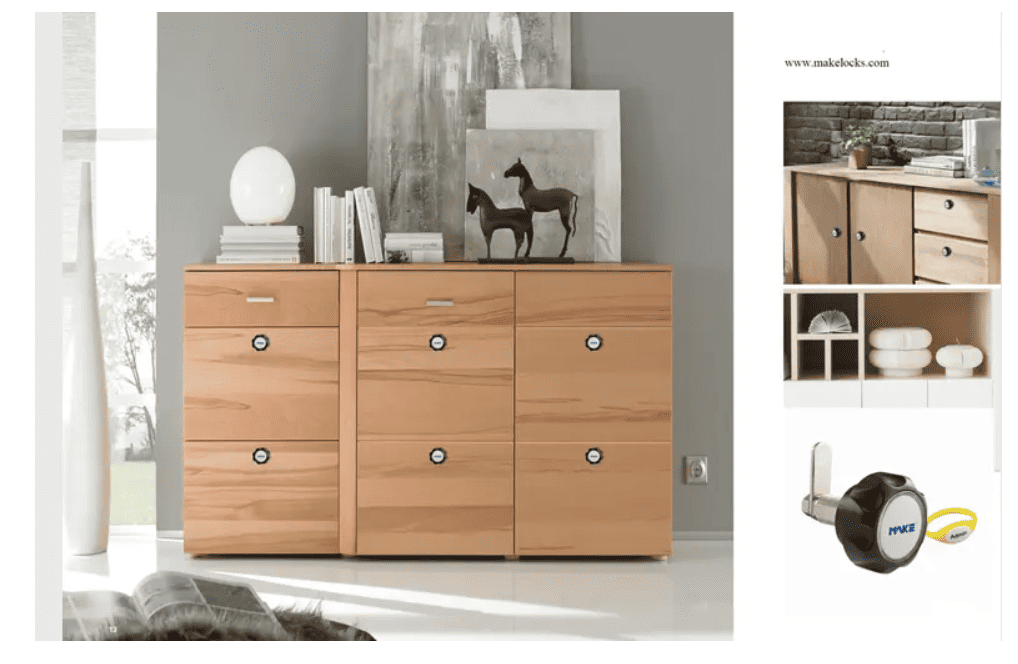
Understanding how RFID cam locks operate provides insight into their growing popularity:
- RFID Reader Module – Detects and reads the unique ID from the presented tag or card.
- Microcontroller Unit (MCU) – Processes the ID, checks against authorized credentials, and decides whether to grant access.
- Cam Actuator – Engages the lock by rotating the cam to lock or unlock the device.
- Power Supply – Most units are battery-powered for flexibility, though some wired models exist for constant operation.
- Communication Interface – Advanced locks connect to access control systems for monitoring and logging.
When a valid credential is presented, the microcontroller signals the actuator, which rotates the cam and unlocks the device. Invalid credentials are ignored, and many locks can send alerts for attempted unauthorized access.
The diversity of RFID cam locks allows for tailored solutions across industries:
Self-contained units that store credential data internally. Ideal for individual lockers, cabinets, or vending machines where network connectivity is not required.
These locks connect to centralized access systems, enabling remote management, audit trails, and credential updates in real-time. They are perfect for large facilities like corporate offices, hospitals, and industrial complexes.
Battery-operated locks simplify installation and portability. Wired locks provide continuous power and are preferred in high-traffic or mission-critical environments.
Modern locks can read multiple RFID frequencies (LF, HF, UHF) and support various protocols, increasing compatibility with existing systems and future-proofing investments.
Some RFID cam locks now allow access via smartphones using NFC or Bluetooth, eliminating the need for physical cards and enabling mobile credentialing.
RFID cam locks are versatile and can be deployed in multiple sectors:
Commercial & Office Use
- Lockers and filing cabinets
- Employee mailrooms
- IT cabinets and equipment storage
Industrial & Manufacturing
- Tool storage and inventory management
- High-value equipment cabinets
- Restricted access to electrical or hazardous areas
Healthcare & Pharmaceuticals
- Medication storage and controlled substance cabinets
- Laboratory equipment and sensitive device storage
- Compliance with regulatory standards for patient safety
Residential & Hospitality
- Hotel guest lockers and room safes
- Gym lockers and shared storage
- Residential mailboxes and storage units
Educational Institutions
- Student lockers
- Shared lab equipment
- Administrative filing cabinets
Public & Government Facilities
- Secure storage of documents and sensitive materials
- Control of restricted access rooms
- Compliance with governmental security standards
RFID cam locks offer numerous benefits over traditional locking mechanisms:
- Keyless Operation – Eliminates the risk of lost or duplicated keys.
- Enhanced Security – Encrypted communication and unique RFID IDs prevent unauthorized access.
- Audit Trails – Records every access attempt for compliance, reporting, and security oversight.
- Remote Management – Administrators can add or revoke credentials without replacing locks.
- Durability – Designed for frequent use and harsh environments.
- Scalability – Suitable for a single lock or thousands across multiple facilities.
- Integration with Smart Systems – Can connect with building management systems, mobile apps, or cloud-based platforms.
Security remains the primary driver for RFID cam lock adoption:
- Encryption Protocols – Prevents eavesdropping on RFID signals.
- Tamper Detection – Locks can trigger alerts if physical tampering occurs.
- Fail-Safe and Emergency Modes – Ensure access during power failures.
- Multi-Level Access Control – Allows hierarchical permissions for different personnel.
- Regulatory Compliance – Many locks meet industry standards for healthcare, education, and government installations.
Compliance with standards like ISO/IEC 14443 (for HF RFID) or ISO/IEC 15693 ensures reliability and interoperability across different systems.
Proper installation and ongoing maintenance maximize the performance and lifespan of RFID cam locks:
- Positioning and Alignment – Ensures the cam engages properly with the door or frame.
- Power Management – Battery-operated models require periodic replacement and low-battery alerts.
- Credential Updates – Regularly adding or removing authorized tags maintains security.
- Firmware and Software Updates – Networked locks need updates to patch security vulnerabilities.
- Environmental Considerations – Outdoor or high-humidity environments require locks rated for corrosion and dust resistance.
Maintenance ensures reliable operation and prevents potential lockouts or security breaches.
Corporate Office Integration
A multinational company upgraded its office lockers and IT cabinets with RFID cam locks. Benefits included:
- Elimination of lost key incidents
- Centralized credential management
- Audit trails for employee access
Healthcare Facility
A hospital replaced traditional mechanical cabinet locks with RFID cam locks for medication storage. Outcomes:
- Full regulatory compliance
- Reduced risk of unauthorized access
- Streamlined multi-department access management
Industrial Warehouse
A manufacturing facility installed RFID cam locks on tool storage cabinets. Results:
- Controlled access to high-value tools
- Logged access events for operational tracking
- Increased staff accountability
Educational Campus
A university implemented RFID cam locks for student lockers. Benefits included:
- Easy administration of temporary and permanent credentials
- Keyless access for students and staff
- Reduced maintenance and key management costs
The RFID cam lock market is expanding due to technological advancements and growing security demands:
Combining RFID with biometrics (fingerprint or facial recognition) enhances security in high-risk environments.
Smartphones can now serve as RFID credentials via NFC or Bluetooth, enabling keyless entry and digital management.
Networked locks connected to cloud platforms allow remote monitoring, centralized management, and real-time alerting.
Advances in low-power electronics and energy harvesting (kinetic or solar) reduce battery dependency.
Locks equipped with IoT sensors provide data on usage patterns, helping organizations optimize operations and predict maintenance needs.
RFID cam locks outperform traditional mechanical and keypad locks in several areas:
- Security: RFID locks are highly resistant to tampering and unauthorized duplication.
- Convenience: No physical keys or complex codes needed.
- Scalability: Can manage thousands of locks from a central system.
- Auditability: Logs provide detailed insights into access events.
- Integration: Compatible with building management and smart systems.
These advantages make RFID cam locks ideal for modern, digitized facilities seeking both convenience and high security.
The future of RFID cam locks looks promising, driven by innovation, IoT integration, and increased demand for smart security solutions:
- Advanced IoT Integration: Fully connected smart buildings using networked RFID cam locks.
- Artificial Intelligence (AI) Analytics: Predictive security alerts and usage optimization.
- Global Standardization: Unified protocols for cross-platform interoperability.
- Sustainable Materials: Eco-friendly construction and longer battery life reduce environmental impact.
- Hybrid Authentication Systems: Combining RFID, biometrics, and mobile access for multi-layered security.
As digital transformation accelerates across industries, RFID cam locks will play a pivotal role in secure access management.
RFID cam locks represent a significant evolution in the access control industry. By merging mechanical reliability with digital intelligence, these locks offer a versatile, secure, and user-friendly solution for modern facilities. From offices and healthcare institutions to industrial warehouses, educational campuses, and residential complexes, RFID cam locks are redefining security and convenience.
With increasing integration into smart building systems, mobile platforms, and cloud-based management, RFID cam locks are not just a convenience—they are a critical component of modern, intelligent, and secure access infrastructure. As technology advances, these locks are expected to become standard across industries seeking enhanced security, auditability, and operational efficiency.