
As modern industries continue to adopt intelligent security solutions, electronic locking technology has become increasingly important in protecting valuable assets, confidential information, and critical infrastructure. Among the many advanced locking systems available today, the electronic cam lock has emerged as a highly reliable and efficient solution for secure access management across commercial, industrial, financial, and government sectors.
Traditional mechanical cam locks have been widely used for decades because of their simple structure, low cost, and ease of installation. However, the growing demand for enhanced security, traceability, and intelligent management has exposed the limitations of conventional locks. Mechanical keys can be duplicated, unlocking records cannot be tracked, and access management remains difficult in environments requiring high-level security.
Electronic cam locks solve these challenges by integrating electronic authentication technology with traditional locking mechanisms. These advanced locks provide secure digital access control, detailed unlocking records, flexible authorization management, and improved operational efficiency. As a result, they are now widely used in government filing cabinets, bank lockers, data centers, telecommunications cabinets, fire equipment storage systems, industrial control cabinets, and museum security applications.
With the rapid development of smart buildings, IoT technology, and intelligent access control systems, electronic cam locks are becoming an essential part of modern security infrastructure. This article explores the working principles, types, applications, advantages, industry trends, and future development of electronic cam lock technology.
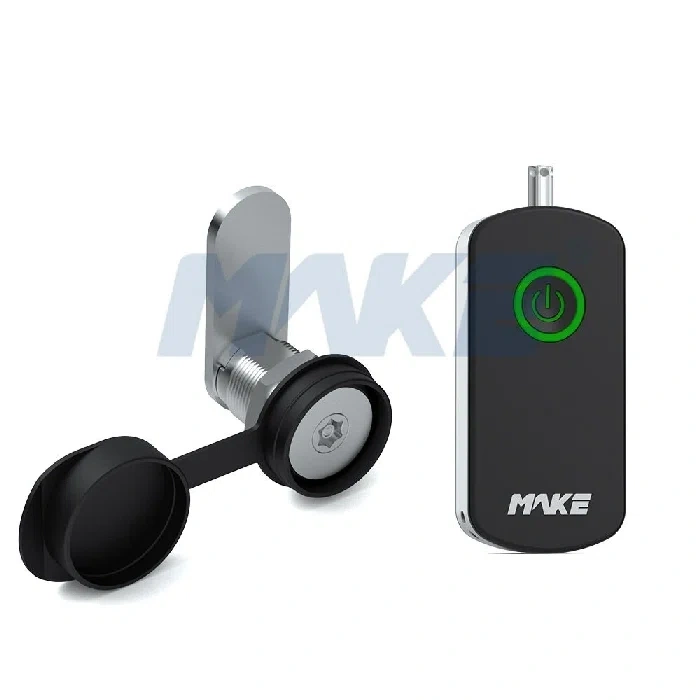
An electronic cam lock is an intelligent locking device that combines the mechanical structure of a traditional cam lock with electronic authentication and access management technology. Unlike standard mechanical locks that rely solely on physical keys, electronic cam locks use digital credentials such as electronic keys, RFID cards, passwords, Bluetooth devices, biometric verification, or network-based authentication systems.
The lock operates by electronically verifying the identity of the user before allowing mechanical rotation of the cam mechanism. Once authorization is confirmed, the lock tongue rotates to unlock or secure the cabinet, drawer, compartment, or enclosure.
Electronic cam locks are designed to improve security management while maintaining the compact structure and simple installation advantages of traditional cam locks. Their ability to record unlocking activities and manage access permissions makes them particularly valuable in environments where security accountability is critical.
The operating principle of electronic cam locks is similar to that of conventional mechanical cam locks, but with a major difference in access verification and information management.
In a typical electronic cam lock system, the unlocking process involves several stages:
The user initiates access using an authorized credential such as:
- Electronic key
- RFID card
- Password
- Fingerprint recognition
- Mobile application
- Bluetooth connection
The lock's sensor or reader detects the credential and sends the information to the internal control system.
The lock compares the provided credential with authorized information stored within its electronic management system. If the identity matches authorized access permissions, the system approves the unlocking request.
Once verification is completed, the internal mechanism activates, allowing the user to rotate the cam or automatically releasing the lock.
One of the most important advantages of electronic cam locks is their ability to generate digital records. The system automatically stores:
- User identity
- Date and time of access
- Unlocking duration
- Access attempts
- Unauthorized entry attempts
This data can later be reviewed by administrators for security auditing and operational management.
After use, the cam rotates back into the locking position either manually or automatically depending on the lock design.
This combination of electronic verification and mechanical reliability significantly improves security compared to traditional locking systems.
Electronic cam locks are available in multiple configurations to suit different applications and security requirements.
RFID electronic cam locks use radio-frequency identification cards or tags for authentication.
Features:
- Contactless operation
- Fast access speed
- Easy user management
- Suitable for multi-user environments
Applications:
- Office cabinets
- Gym lockers
- School storage systems
- Retail display cabinets
RFID technology is highly popular because it simplifies access management while reducing physical key handling.
These locks require users to enter a password or PIN code for access authorization.
Features:
- No physical key required
- Easy code modification
- Low maintenance
- Cost-effective solution
Applications:
- Home safes
- Commercial storage units
- Hotel cabinets
- Delivery lockers
Password-based systems are commonly used where convenience and affordability are important.
Bluetooth-enabled cam locks allow users to unlock systems using smartphones or mobile applications.
Features:
- Wireless operation
- Remote management capability
- Temporary access sharing
- Real-time monitoring
Applications:
- Smart offices
- Co-working spaces
- Shared storage systems
- Intelligent lockers
Bluetooth technology is becoming increasingly popular due to smartphone integration and flexible access control.
Biometric locks use fingerprints, facial recognition, or other biological identifiers for authentication.
Features:
- Extremely high security
- No keys or cards required
- Difficult to duplicate
- Fast user verification
Applications:
- Government facilities
- Financial institutions
- Data centers
- Research laboratories
Biometric systems provide enhanced protection for highly sensitive environments.
These locks are connected to centralized management systems through wired or wireless communication networks.
Features:
- Remote monitoring
- Real-time access control
- Cloud-based management
- Security alerts and notifications
Applications:
- Industrial automation systems
- Telecommunications cabinets
- Utility infrastructure
- Smart city projects
Networked locks are increasingly important in large-scale intelligent security systems.
Electronic cam locks offer numerous benefits compared to traditional mechanical locks.
Traditional mechanical keys can be copied easily, creating significant security risks. Electronic authentication greatly reduces unauthorized duplication and improves access protection.
Every unlocking event can be recorded electronically, creating a complete audit trail for security management.
Administrators can easily:
- Add or remove users
- Set temporary access rights
- Schedule access times
- Restrict unauthorized users
This flexibility greatly improves operational efficiency.
Electronic systems eliminate the need for carrying large numbers of physical keys.
Lost mechanical keys often require lock replacement. Electronic systems can simply revoke access permissions digitally.
Electronic cam locks can integrate with:
- Building management systems
- Alarm systems
- IoT platforms
- Access control networks
This creates a fully connected security ecosystem.
Electronic cam locks are widely used across many industries due to their versatility and reliability.
Government Facilities
Government offices require secure document storage and access tracking. Electronic cam locks help protect confidential information while maintaining accountability.
Banking and Financial Institutions
Bank lockers and cash storage systems rely on advanced security solutions to prevent unauthorized access.
Museums and Cultural Institutions
Museums use electronic cam locks to protect valuable cultural relics, artifacts, and exhibition equipment.
Telecommunications Industry
Telecommunication cabinets and network infrastructure require secure access management to prevent tampering and vandalism.
Data Centers
Server cabinets and network racks use electronic cam locks to control access to critical IT infrastructure.
Fire Protection Equipment
Fire equipment cabinets require secure yet accessible locking systems to prevent unauthorized use while ensuring emergency access.
Industrial Equipment Cabinets
Factories use electronic cam locks on control panels, machinery cabinets, and automation systems to improve operational safety.
Healthcare Industry
Hospitals and laboratories use electronic locks to secure medicines, equipment, and confidential records.
While mechanical cam locks remain popular in low-security applications, electronic cam locks offer substantial advantages.
Feature | Mechanical Cam Lock | Electronic Cam Lock |
Key Duplication Risk | High | Very Low |
Access Record | None | Available |
User Management | Limited | Flexible |
Security Level | Basic | Advanced |
Remote Control | No | Possible |
Audit Trail | No | Yes |
Smart Integration | No | Yes |
Mechanical locks remain suitable for simple residential applications, but electronic cam locks are increasingly preferred in professional and high-security environments.
Choosing and installing the right electronic cam lock requires careful planning.
Power Supply
Electronic locks may use:
- Replaceable batteries
- Rechargeable batteries
- External power supply
- Energy harvesting systems
Battery life and maintenance schedules should be considered during selection.
Environmental Conditions
Applications exposed to:
- Dust
- Moisture
- Corrosion
- Extreme temperatures
require locks with suitable IP ratings and corrosion-resistant materials.
Compatibility
The lock should match the dimensions and mounting requirements of the cabinet or enclosure.
Emergency Override
Many electronic cam locks include mechanical override functions for emergency access during power failures.
Maintenance and Reliability
Electronic cam locks generally require minimal maintenance, but regular inspections are still recommended.
Maintenance Best Practices:
- Monitor battery condition
- Clean electronic contacts
- Update software if applicable
- Inspect mechanical components
- Test access credentials regularly
Modern electronic locks are designed for long operational life and reliable performance in demanding environments.
The electronic cam lock market is evolving rapidly due to advances in digital technology and smart infrastructure.
1. IoT Integration
More locks are being connected to IoT platforms for centralized monitoring and predictive maintenance.
2. Cloud-Based Access Control
Cloud systems allow administrators to manage access permissions remotely from anywhere.
3. Mobile Credential Technology
Smartphone-based unlocking is replacing physical cards and keys in many applications.
4. Artificial Intelligence Security
AI-powered security analysis can identify unusual access behavior and generate automatic alerts.
5. Energy-Efficient Designs
Manufacturers are improving battery efficiency to reduce maintenance costs and extend service life.
6. Cybersecurity Enhancement
As locks become connected to networks, protecting digital communication from cyber threats becomes increasingly important.
The global electronic cam lock market continues to grow as industries prioritize intelligent security solutions.
Several factors are driving market expansion:
- Rising security concerns
- Growth of smart buildings
- Expansion of data centers
- Industrial automation development
- Increased demand for access traceability
- Government infrastructure modernization
Asia-Pacific, North America, and Europe remain major markets for electronic locking technology due to rapid industrialization and digital infrastructure investments.
Manufacturers are also focusing on:
- Compact designs
- Wireless communication
- Multi-factor authentication
- Sustainable materials
- User-friendly interfaces
The future of electronic cam locks will likely involve deeper integration with smart ecosystems and fully automated access control networks.
Electronic cam locks have become an essential security solution for modern industrial, commercial, and institutional environments. By combining traditional mechanical reliability with advanced electronic authentication and access management technology, these locks provide superior security, operational efficiency, and accountability.
Compared with traditional mechanical locks, electronic cam locks offer significant advantages including digital access control, unlocking records, flexible user management, and smart system integration. Their applications continue to expand across government facilities, financial institutions, industrial systems, telecommunications infrastructure, museums, healthcare facilities, and data centers.
As smart technology, IoT connectivity, and intelligent building systems continue to evolve, electronic cam locks will play an increasingly important role in future security infrastructure. Their ability to provide secure, traceable, and convenient access control ensures strong market demand and continuous technological innovation for years to come.