
In an era where security threats continue to evolve and operational efficiency is paramount, the demand for reliable, user-friendly locking solutions has never been higher. Among the technologies reshaping access control, digit combination locks are experiencing a significant resurgence across commercial, industrial, retail, and residential sectors. Once considered a basic alternative to traditional keyed locks, today’s digit combination locks have become sophisticated, durable, and highly adaptable security devices. Their growing adoption reflects broader market trends toward keyless access, streamlined operations, and enhanced protection against unauthorized entry.
From vending machines and lockers to cabinets, doors, and equipment enclosures, digit combination locks are redefining how organizations and individuals manage security. This news report explores the rising popularity of digit combination locks, their technical features, applications, benefits, market drivers, and future outlook.
Combination locks are not new. Mechanical dial locks have been used for centuries to protect safes, vaults, and storage containers. However, early designs were often bulky, difficult to operate, and limited in flexibility. The modern digit combination lock represents a significant technological leap.
Instead of rotating dials, today’s models rely on compact numeric keypads or push-button interfaces that allow users to input a personalized code. Internally, these locks employ precisely engineered mechanical or electromechanical systems that release the locking mechanism only when the correct code is entered. The result is a security device that combines simplicity with reliability.
Recent advancements in materials, precision manufacturing, and digital integration have further enhanced the performance of combination locks. Weather-resistant housings, anti-tamper designs, and high-cycle durability now make these locks suitable for demanding environments where traditional locks may fail.
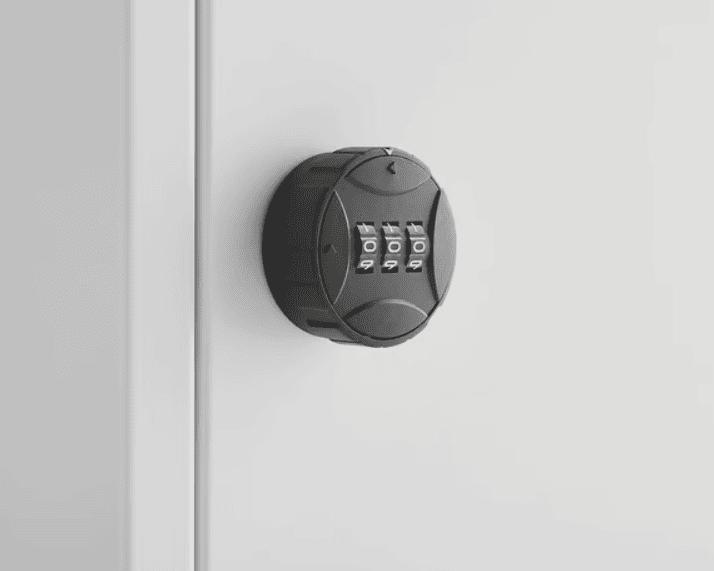
The renewed interest in digit combination locks is driven by several key factors:
One of the most compelling advantages of combination locks is that they remove the need for physical keys. Lost keys, duplicated keys, and unauthorized access caused by misplaced key sets are common security vulnerabilities. With a combination lock, access is controlled by a code rather than a physical object, dramatically reducing the risk of accidental or malicious entry.
For businesses operating multiple sites or managing large numbers of employees, key management can be costly and inefficient. Digit combination locks streamline operations by allowing administrators to simply change access codes when staff changes occur.
Digit combination locks are intuitive. Users only need to remember a code rather than carry a key or card. This convenience is particularly valuable in high-traffic environments such as gyms, offices, schools, and public facilities where frequent access is required.
Modern keypad designs feature tactile buttons, clear numbering, and ergonomic layouts, ensuring quick and accurate code entry. Some models also provide visual or audible feedback, confirming correct or incorrect input.
Compared with electronic card readers or biometric systems, digit combination locks offer a more affordable solution without compromising security. They require minimal infrastructure, no network connectivity, and little ongoing maintenance. This makes them especially attractive for small businesses, facility managers, and equipment manufacturers seeking reliable security at a reasonable cost.
Unlike purely electronic systems, many digit combination locks are mechanical or hybrid mechanical-electronic devices. This means they can operate without external power sources and remain functional even in harsh conditions. High-quality locks are built from zinc alloy, stainless steel, or reinforced polymers, offering resistance to corrosion, impact, and environmental exposure.
The versatility of digit combination locks has led to widespread adoption across a range of sectors.
One of the fastest-growing applications for digit combination locks is in vending machines, self-service kiosks, and automated retail equipment. Operators require secure access for restocking and maintenance while preventing unauthorized tampering.
Digit combination locks allow operators to change codes periodically or after personnel changes, eliminating the need to re-key locks. Their compact design fits seamlessly into machine cabinets, and their resistance to vibration and outdoor conditions ensures reliable performance.
Schools, gyms, workplaces, and public facilities increasingly rely on combination locks for lockers and storage compartments. Users appreciate the convenience of keyless access, while facility managers benefit from reduced administrative overhead.
In shared environments, resettable combination locks enable new users to set their own codes, enhancing privacy and flexibility. This functionality is especially valuable in coworking spaces, fitness centers, and transportation hubs.
Manufacturing plants, power stations, and data centers use digit combination locks to protect sensitive equipment, control panels, and tool cabinets. These environments demand locks that can withstand dust, moisture, and frequent use.
Industrial-grade combination locks are designed with reinforced internal mechanisms and high cycle ratings, ensuring long service life even under continuous operation.
Although more common in commercial and industrial settings, digit combination locks are also gaining traction in residential and office applications. Homeowners value the ability to grant temporary access to guests, service providers, or tenants without handing over keys. Office managers use combination locks to secure meeting rooms, storage areas, and private offices while maintaining flexible access control.
Today’s digit combination locks are far more advanced than earlier models. Several technical features distinguish high-quality products in the market.
Most combination locks allow between three and six digits, providing thousands or even millions of possible combinations. This significantly reduces the likelihood of unauthorized access through guessing or brute-force attempts.
Resettable designs enable users to change codes quickly without dismantling the lock. This is critical for organizations that experience frequent personnel turnover or need to update security protocols regularly.
Manufacturers incorporate hardened internal components, shielded mechanisms, and anti-drill plates to deter forced entry. These features protect against common attack methods such as picking, prying, or drilling.
For outdoor or industrial use, many locks are rated for water resistance, dust protection, and temperature extremes. Protective coatings and sealed housings prevent corrosion and ensure consistent operation in challenging environments.
Hybrid models combine mechanical reliability with electronic enhancements, such as audit trails, time-restricted access, or emergency override functions. While remaining largely independent of power grids, these locks offer advanced functionality for specialized applications.
Digit combination locks provide several notable security benefits compared with conventional keyed locks.
Keys can be copied without the owner’s knowledge, posing a significant security risk. Codes, by contrast, can be shared selectively and changed at any time. This dynamic access control makes combination locks particularly attractive for environments with sensitive assets.
In organizations with multiple users, distributing keys is time-consuming and difficult to track. With combination locks, access is granted simply by communicating a code, eliminating logistical challenges and reducing the risk of lost or stolen keys.
High-quality combination locks are engineered to withstand environmental stress, frequent use, and mechanical wear. This reliability is essential in industrial and outdoor installations where electronic systems may fail due to power issues or exposure.
The global market for combination locks is experiencing steady growth, driven by expanding infrastructure, increased automation, and heightened security awareness. Several trends are shaping the industry:
From vending machines and parcel lockers to automated retail and smart storage systems, self-service solutions are proliferating. These applications require secure yet user-friendly access control, making digit combination locks a natural fit.
Consumers and businesses alike are embracing keyless technologies to improve convenience and reduce administrative burdens. This shift aligns perfectly with the strengths of combination locks.
In many sectors, organizations seek security solutions that balance performance with affordability. Digit combination locks offer a compelling value proposition, delivering dependable protection without the complexity or expense of fully electronic systems.
Manufacturers increasingly offer customized lock designs for original equipment manufacturers (OEMs). This includes tailored dimensions, mounting options, branding, and functional features, enabling seamless integration into machines, cabinets, and enclosures.
Leading lock manufacturers are investing heavily in research and development to enhance product performance, user experience, and durability. Innovations include:
- Improved internal gearing for smoother operation and longer service life
- Advanced surface treatments for corrosion resistance
- Modular designs that simplify installation and maintenance
- Enhanced tactile feedback for accurate code entry
By responding to customer feedback and evolving industry needs, manufacturers are ensuring that digit combination locks remain relevant and competitive in a rapidly changing security landscape.
Organizations and individuals considering digit combination locks should evaluate several factors before selecting a product:
High-risk environments may require locks with extended code lengths, reinforced housings, and advanced anti-tamper features.
Outdoor or industrial installations demand weather-resistant and corrosion-proof designs.
High-traffic applications benefit from locks with durable components and easy reset mechanisms.
Different locks are designed for panel mounting, surface mounting, or door installation. Compatibility with existing equipment is essential.
While combination locks generally require minimal upkeep, long-term durability and availability of replacement parts should be considered.
Despite their advantages, digit combination locks are not without limitations. User error, such as forgotten codes, can lead to access issues. In high-security environments, there is also a risk of “shoulder surfing,” where unauthorized individuals observe code entry.
However, these challenges can be mitigated through best practices such as periodic code changes, training users on secure code handling, and selecting locks with concealed or shielded keypads.
Looking ahead, digit combination locks are expected to continue evolving alongside broader security and automation trends.
Future models may incorporate connectivity options, enabling integration with building management systems, access logs, and remote administration platforms while maintaining mechanical reliability.
Design improvements will focus on usability, including illuminated keypads, ergonomic button layouts, and intuitive feedback mechanisms.
As industries prioritize environmental responsibility, manufacturers are exploring recyclable materials and energy-efficient production processes for lock components.
Demand for application-specific solutions will drive further customization, allowing locks to be tailored precisely to the requirements of vending machines, lockers, industrial enclosures, and residential doors.
The digit combination lock has emerged as a cornerstone of modern access control, offering a compelling blend of security, convenience, durability, and cost efficiency. Its growing adoption across vending machines, lockers, industrial cabinets, and residential applications underscores its versatility and relevance in today’s security landscape.
As organizations seek practical alternatives to traditional keys and complex electronic systems, digit combination locks provide a balanced solution that meets the demands of both security and usability. With ongoing innovation from manufacturers and expanding applications across industries, these locks are poised to remain an integral part of access control strategies for years to come.
In a world increasingly defined by automation, self-service, and operational efficiency, the humble combination lock has been transformed into a sophisticated security device—proof that sometimes, the most effective innovations are those that refine simplicity rather than replace it.
