
Mail security has become an increasingly important concern in recent years as identity theft, package theft, and mail tampering incidents continue to rise worldwide. While digital communication has grown rapidly, physical mail remains essential for personal correspondence, government documents, financial statements, legal notices, and small parcel deliveries. Unfortunately, unsecured or poorly protected mailboxes are often an easy target for theft and vandalism.
One of the simplest yet most effective solutions to this growing problem is the mailbox cam lock. Compact, affordable, and easy to install, mailbox cam locks provide a reliable mechanical locking mechanism that significantly improves mailbox security. Widely used in residential mailboxes, apartment complexes, commercial buildings, and postal lockers, cam locks have become a standard component in modern mailbox systems.
This article explores mailbox cam locks in detail, including their working principles, types, materials, installation methods, key features, applications, and future trends. By understanding how mailbox cam locks function and why they are so widely adopted, property owners, facility managers, and security professionals can make informed decisions to protect mail effectively.
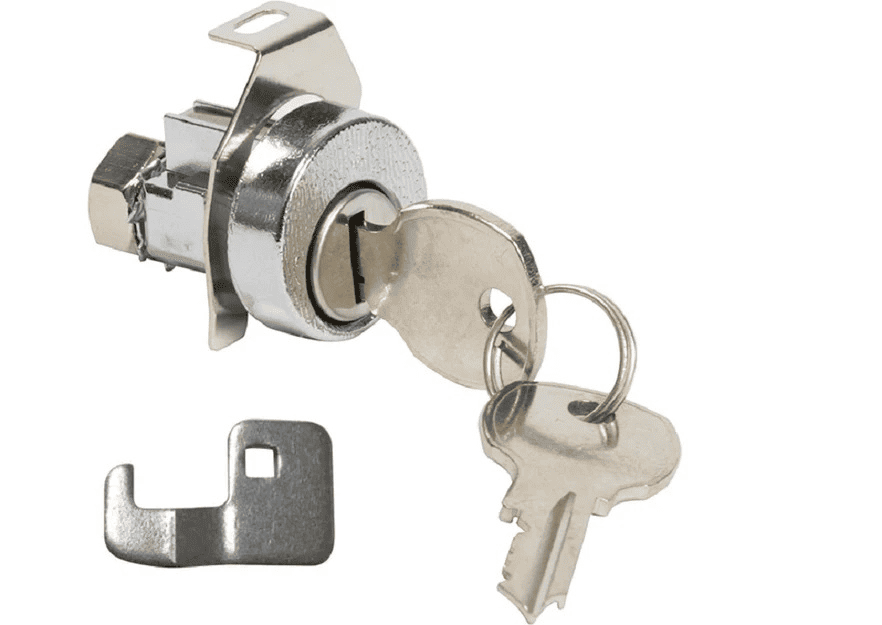
A mailbox cam lock is a quarter-turn mechanical lock that secures a mailbox door or access panel. It consists of a lock cylinder, a rotating cam (metal tongue), and a fastening nut or clip. When the correct key is inserted and turned, the cam rotates to either engage or disengage with a strike plate or mailbox frame, allowing the door to open or close.
Unlike complex locking systems, cam locks are valued for their simplicity and durability. Their compact size allows them to fit easily into thin metal or plastic mailbox doors, while their straightforward design ensures reliable operation over long periods with minimal maintenance.
Mailbox cam locks are typically keyed differently or keyed alike, depending on security needs. They are compatible with a wide range of mailbox styles, including wall-mounted mailboxes, curbside mailboxes, cluster mailboxes, and parcel lockers.
The importance of mailbox security has grown significantly due to several modern challenges.
Identity theft remains one of the most common crimes associated with mail theft. Personal information found in bank statements, medical documents, and official letters can be exploited for fraudulent purposes. In addition, the rise of e-commerce has increased the number of small parcels delivered through mailboxes, making them attractive targets for opportunistic theft.
Apartment buildings and shared mailrooms are particularly vulnerable, as multiple mailboxes are often located in public or semi-public spaces. Without proper locking mechanisms, unauthorized access becomes easy and frequent.
Mailbox cam locks address these concerns by providing a physical barrier that deters theft, restricts access, and protects sensitive contents.
A typical mailbox cam lock consists of several essential components, each contributing to its functionality and security.
The lock cylinder houses the internal pin or wafer mechanism that responds to the correct key. This component determines the lock's security level and key compatibility.
The cam is the rotating metal piece attached to the back of the cylinder. Its shape and length vary depending on the application, allowing it to latch onto different mailbox frames or locking points.
The nut or retaining clip secures the lock cylinder to the mailbox door, ensuring stability during operation.
Together, these components form a compact, effective locking solution suitable for a wide range of mailbox designs.
Mailbox cam locks are available in several variations to meet different security requirements, installation conditions, and user preferences.
Standard keyed cam locks are the most common type used in residential and commercial mailboxes. Each lock is operated by a unique key or a set of keys keyed alike. They offer basic security and are cost-effective, making them suitable for individual mailboxes and low-risk environments.
In keyed-alike systems, multiple cam locks are operated using the same key. This configuration is popular in apartment complexes, office buildings, and property management applications where maintenance staff need access to multiple mailboxes.
Master key cam locks provide a higher level of access control. Individual mailboxes have unique keys, while a master key can open all locks in the system. This setup is commonly used in large residential complexes and commercial facilities.
Combination cam locks eliminate the need for physical keys by using numeric dials. While less common in mailboxes, they are sometimes used in shared or temporary access situations.
Mailbox cam locks are manufactured from various materials to ensure durability, corrosion resistance, and long service life.
Zinc alloy cam locks are widely used due to their affordability and resistance to wear. They are suitable for most indoor and outdoor mailbox applications.
Brass cam locks offer enhanced corrosion resistance and smooth operation, making them ideal for humid or coastal environments.
Stainless steel cam locks provide superior strength and weather resistance. These locks are often chosen for high-security or outdoor installations exposed to harsh conditions.
Common finishes include chrome plating, nickel plating, black powder coating, and natural metal finishes, allowing locks to match different mailbox aesthetics.
One of the major advantages of mailbox cam locks is their ease of installation. Most cam locks are designed for tool-friendly, quick installation using standard hand tools.
Installation typically involves removing the old lock (if present), inserting the new cam lock through the mailbox door hole, positioning the cam correctly, and securing it with a retaining nut. The cam length and orientation can often be adjusted to ensure proper engagement with the mailbox frame.
Mailbox cam locks are also widely used as replacement locks, making them a convenient solution when keys are lost, tenants change, or security upgrades are required.
Mailbox cam locks offer several key benefits that make them the preferred choice for mailbox security.
First, they provide effective theft deterrence. Even a basic lock significantly reduces the likelihood of unauthorized access.
Second, their compact and simple design allows them to fit most mailbox types without extensive modification.
Third, cam locks are cost-effective, offering strong security at a relatively low price compared to electronic or smart locking systems.
Finally, mailbox cam locks are durable and low-maintenance, making them suitable for long-term use in residential and commercial settings.
Mailbox cam locks are used in a wide range of applications.
In residential homes, they protect personal mail and small packages from theft.
In apartment complexes, cam locks secure individual mailboxes within centralized mailrooms, supporting organized and controlled mail delivery.
In commercial buildings, they protect business correspondence, invoices, and sensitive documents.
They are also commonly used in postal service equipment, parcel lockers, storage cabinets, and utility boxes, highlighting their versatility beyond traditional mailboxes.
Compared to electronic or smart mailbox locks, cam locks offer simplicity, reliability, and affordability. While smart locks provide advanced features such as remote access and notifications, they require power sources, connectivity, and higher investment.
Mailbox cam locks, by contrast, operate mechanically and remain functional regardless of power availability. This makes them especially suitable for outdoor and high-traffic environments where reliability is critical.
While mailbox cam locks are relatively simple devices, many manufacturers design them to meet recognized quality and durability standards. Locks used in multi-unit mail systems often comply with postal service regulations and housing authority requirements.
High-quality cam locks feature precision-machined components, smooth key operation, and resistance to picking or forced rotation.
Proper maintenance can significantly extend the service life of mailbox cam locks. Periodic cleaning, lubrication, and inspection help ensure smooth operation and prevent corrosion or debris buildup.
In most cases, cam locks can last for many years with minimal upkeep, making them a reliable long-term security solution.
As security needs evolve, mailbox cam locks are also undergoing gradual innovation. Manufacturers are focusing on improved materials, enhanced key designs, and anti-tampering features.
Hybrid solutions that combine mechanical cam locks with electronic access control are emerging in high-end residential and commercial projects. However, traditional cam locks remain dominant due to their simplicity and proven reliability.
Sustainability is another growing consideration, with increased use of recyclable materials and environmentally friendly manufacturing processes.
Mailbox cam locks continue to play a vital role in protecting mail and personal information in an increasingly security-conscious world. Their simple design, dependable performance, and cost-effective nature make them an ideal solution for residential, commercial, and institutional applications.
As mail theft and privacy concerns persist, mailbox cam locks offer a practical and proven method to enhance security without complexity. Whether used as original equipment or replacement hardware, these compact locks remain an essential component of modern mailbox systems.
