
In today’s world, where safeguarding personal belongings and sensitive equipment is essential, simple yet effective security mechanisms still play a crucial role. One such mechanism is the cam lock—a deceptively simple device that provides robust security for cabinets, lockers, storage boxes, mailboxes, and countless other enclosures. But what exactly is a cam lock, how does it work, and how do you choose the right one for your needs? This in-depth guide will help you understand everything about cam locks, from their structure and working principle to the types available on the market and key factors to consider when purchasing them.
At its core, a cam lock is an L-shaped locking device commonly used to secure cabinet doors, drawers, lockers, and enclosures of various kinds. The name “cam lock” is derived from the cam—a flat, rotating arm or tongue bar attached to the end of the lock’s core. When the key is turned, the cam rotates behind a frame or strike plate, preventing the door or panel from opening.
Cam locks are valued for their straightforward design, ease of installation, cost-effectiveness, and versatility. Whether you want to secure a single cabinet at home or need dozens of locks for a series of industrial lockers, cam locks can provide the level of security you require.
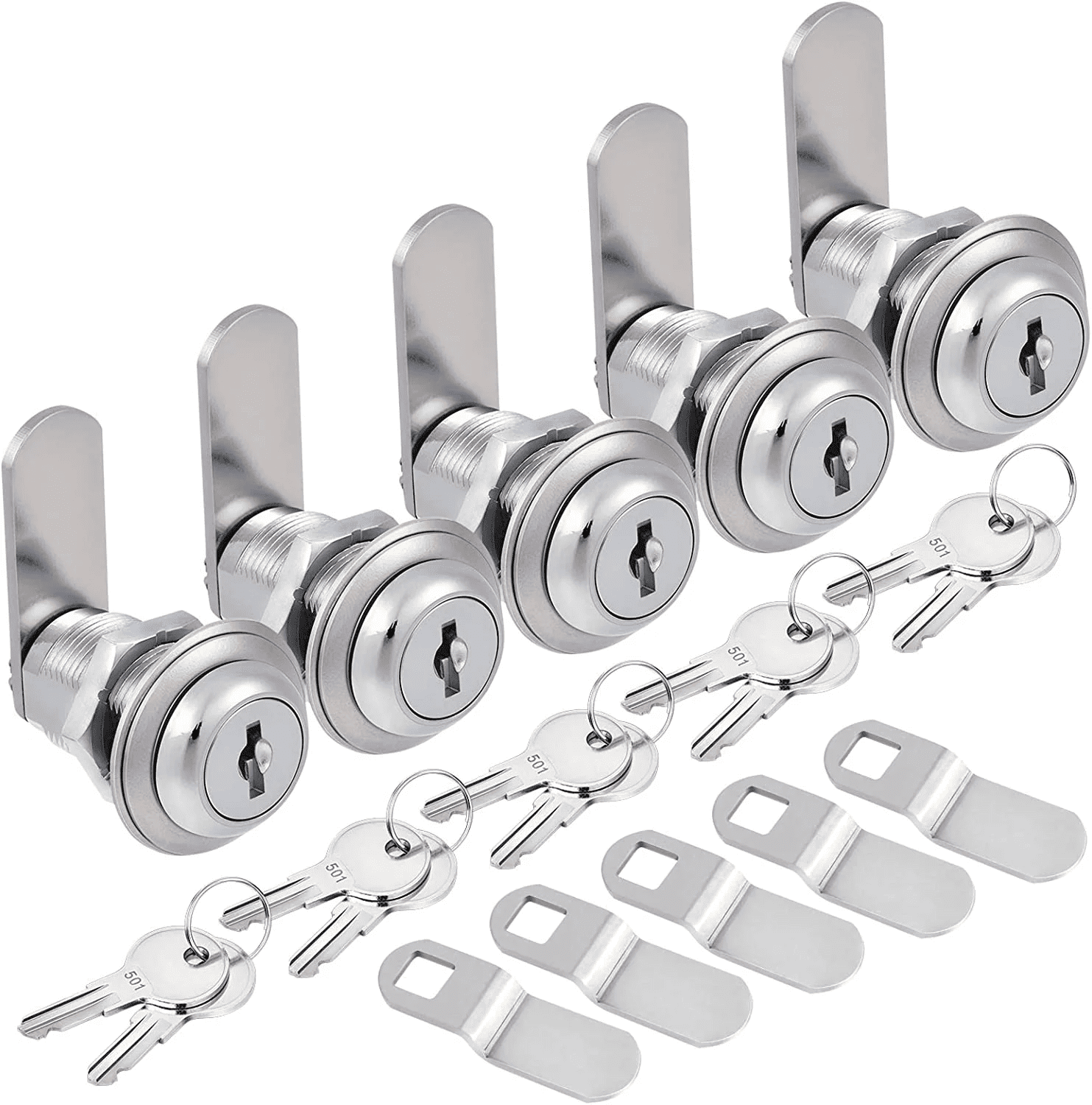
To understand how cam locks work, it helps to break down their key components:
This is the main housing of the lock, typically cylindrical, containing the core locking mechanism.
The cam is the rotating metal piece at the back of the lock. Its motion is what physically secures or releases the door or panel.
Traditional cam locks are opened and closed using a key that fits into the lock body. More advanced models may use electronic access methods instead.
These parts hold the lock body securely in place when mounted on a panel or door.
Though cam locks vary in size and design, their operating principle remains remarkably simple. Here’s how a typical mechanical cam lock works:
The lock body is inserted through a hole drilled into the surface of a door, drawer, or panel. A nut or clip secures it from the inside.
When the key is inserted and turned, the cam rotates to a horizontal or angled position, hooking behind a strike plate or the inside edge of the enclosure. This action prevents the door or panel from opening.
Turning the key back rotates the cam away from the strike plate or frame. In its vertical position, the cam is no longer obstructing the opening, allowing the door or panel to swing open freely.
This simple rotation mechanism is what makes cam locks so effective for basic security needs.
Although all cam locks operate on the same fundamental principle, there are various designs to suit different applications and security requirements. Let’s take a closer look at the most common types you’ll encounter.
The classic, most widely used type is the cylinder cam lock. Its round, tubular body houses a pin tumbler mechanism that is operated by a flat or tubular key. These locks are durable, offer decent security, and are commonly found in office furniture, file cabinets, cash boxes, and storage lockers.
Cylinder cam locks can be further classified into:
Flat Key Cam Locks:
Opened with a flat, traditional key. Simple and reliable.
Tubular Cam Locks:
Feature a tubular key with a round shape, providing enhanced resistance to picking compared to flat keys.
As security needs evolve, so do cam locks. Electronic cam locks incorporate digital access systems such as:
RFID Cam Locks:
Unlocked using RFID cards, wristbands, or fobs. Commonly used in gyms, hotels, and smart lockers.
Numeric Keypad Cam Locks:
Allow keyless access through a PIN code.
Biometric Cam Locks:
Operated via fingerprint recognition for higher security.
These modern alternatives offer advanced features like audit trails (tracking who accessed the lock and when) and remote management, making them ideal for commercial and institutional environments.
For applications where convenience outweighs security, thumb-turn cam locks are an option. Instead of a key, users simply turn a knob or lever to lock or unlock the cam. While they do not provide theft protection, they are useful for keeping doors and panels closed in low-risk areas.
Due to their flexibility and ease of use, cam locks are found in a wide variety of settings. Some common examples include:
Office and residential cabinets
Mailboxes and parcel lockers
Gym and school lockers
Display cases and showcases
Cash drawers and safes
Vending machines and gaming consoles
Utility panels and electrical enclosures
When selecting a cam lock, it’s important to balance security, functionality, and practicality. Here are some factors you should consider:
Durability is critical, especially if the lock will be exposed to frequent use or outdoor conditions. Popular materials include:
Zinc Alloy:
A versatile choice for general applications; corrosion-resistant and easy to cast.
Brass:
Offers good strength and corrosion resistance; commonly used for higher-end locks.
Stainless Steel:
Ideal for harsh environments due to its excellent resistance to rust and wear.
The lock’s finish—whether chrome-plated, nickel-plated, or powder-coated—also affects appearance and corrosion resistance.
Cam locks come in different body lengths and cam arm sizes. Be sure to match the lock’s length to the thickness of the door or panel it will secure. A lock that is too short won’t anchor properly; one that’s too long may protrude unnecessarily.
When ordering multiple cam locks, decide whether you want them keyed alike or keyed differently:
Keyed Alike:
All locks open with the same key—convenient for managing multiple enclosures.
Keyed Differently:
Each lock has a unique key—provides higher security if different compartments should remain separate.
Cams can vary in shape and rotation angle. Some rotate 90 degrees, others 180 degrees, depending on how the door or panel needs to be secured. Make sure the cam arm is compatible with your enclosure’s strike plate or frame.
For high-value or sensitive areas, choose cam locks with advanced pin tumbler mechanisms, tubular keys, or electronic features. For low-risk applications, simpler designs may suffice.
Installing a cam lock is generally straightforward:
Measure and drill the mounting hole to match the lock’s diameter.
Insert the lock body and secure it with the retaining nut.
Attach the cam arm, adjusting its position as needed.
Test the lock by rotating the key to ensure smooth operation.
Maintenance is minimal but important. Periodically lubricate the lock cylinder with graphite or a silicone-based lubricant to prevent sticking. For electronic cam locks, keep batteries fresh and replace them promptly to avoid lockouts.
Why do millions of people rely on cam locks for everyday security? Here are a few reasons:
No complicated installation or operation—anyone can use them.
Cost-effective compared to more sophisticated locking systems.
Suitable for countless applications, from furniture to industrial equipment.
Available in different sizes and security levels to meet diverse needs.
Minimal upkeep required to keep them working smoothly for years.
While traditional mechanical cam locks continue to serve millions of homes and businesses, the future points toward greater integration with smart technology. Electronic cam locks with wireless access control, audit capabilities, and remote management are becoming increasingly popular in offices, hotels, and modern storage solutions.
As workplaces and living spaces become smarter, we can expect to see cam locks evolve further—incorporating mobile apps, cloud connectivity, and AI-driven access control for unprecedented convenience and security.
Cam locks may seem simple at first glance, but their straightforward design and reliable performance make them an indispensable security solution for a wide range of applications. From traditional cylinder locks that protect your office files to high-tech electronic models that guard modern smart lockers, cam locks prove that sometimes the simplest solutions are the most effective.
Whether you’re upgrading your office cabinets, outfitting a locker room, or securing sensitive equipment, understanding how cam locks work—and how to choose the right one—can help you protect what matters most with confidence and peace of mind.