
Security has always been a fundamental human concern. From ancient wooden bolts and iron padlocks to today's high-tech biometric scanners, societies have continuously sought better ways to protect property and ensure safety. Among the most transformative innovations in modern access control is RFID (Radio Frequency Identification) technology.
What started as a niche tool for supply chain tracking has now become a mainstream solution in door security. Hotels, hospitals, corporations, schools, and residential complexes worldwide are adopting RFID-based locks, replacing the cumbersome keys and vulnerable magnetic stripe cards of the past.
RFID door locks represent more than just a technological upgrade; they embody a shift toward convenience, durability, and smart integration. As digitalization continues to permeate daily life, RFID technology has become a bridge between physical security and smart ecosystems.
This article offers a comprehensive look into RFID door locks—their origins, how they work, their benefits, limitations, real-world applications, and the trends shaping their future.
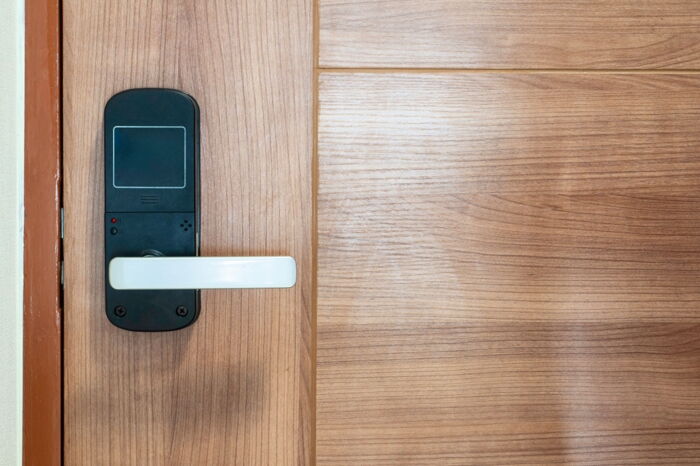
At its core, an RFID door lock is an electronic locking system that uses radio waves to authenticate and grant access. Instead of inserting a physical key or swiping a magnetic card, a user simply presents an RFID-enabled credential such as a key card, key fob, or even a smartphone to a reader. If authorized, the lock disengages, allowing entry.
An RFID system typically consists of three main components:
Credential (Tag/Transponder): A card, fob, or other object embedded with a microchip and antenna that stores and transmits unique identification data.
Reader: A device mounted near the door that emits radio waves, detects credentials, and forwards the transmitted data for verification.
Control System: Software or hardware that checks the data against an access database. If the credential is valid, it signals the lock to open.
Unlike traditional keys, which are static and can be copied, RFID credentials use encrypted codes that are much harder to duplicate.
RFID traces its origins to World War II, when radar systems were developed to identify friendly aircraft. By the 1970s, RFID had moved into commercial applications, primarily for inventory management and asset tracking.
The adoption of RFID in access control began in the 1990s, with early implementations in corporate offices and government facilities. Hotels quickly followed, recognizing the advantages over magnetic stripe cards. By the 2000s, RFID became the gold standard in hospitality, eventually spreading to residential and institutional applications.
Today, RFID is not only used in door locks but also in public transportation systems, event ticketing, warehouse logistics, and even livestock tracking—demonstrating its versatility and reliability.
The operation of an RFID door lock can be explained step by step:
Credential Presented – The user brings their card, fob, or phone near the reader. Depending on the system, proximity may range from a few centimeters to several meters.
Data Transmission – The credential's embedded chip sends a unique identification string to the reader using radio waves.
Verification – The reader relays this information to the control unit, which checks it against a secure database of authorized users.
Authorization – If the data matches, the control unit sends a signal to the electronic lock.
Access Granted – The lock disengages, and the door opens.
RFID systems operate at different frequencies, which affect range and application:
Low Frequency (LF, 125–134 kHz): Short read range, high resistance to interference. Common in basic access systems.
High Frequency (HF, 13.56 MHz): Standard in most RFID door locks, balancing range and data capacity.
Ultra-High Frequency (UHF, 860–960 MHz): Longer range, more common in logistics than door security.
RFID tags use encryption, making them far more resistant to duplication than mechanical keys or magnetic stripe cards. Lost or stolen credentials can be deactivated instantly, eliminating the need to replace locks.
Unlike mechanical locks, RFID systems do not require insertion or swiping. A simple wave of a credential provides instant access, streamlining entry for users.
Because there's no physical contact between the credential and reader, RFID locks experience less wear and tear, leading to longer lifespans.
Administrators can issue, revoke, or modify access credentials remotely. This scalability makes RFID systems suitable for both small offices and large multi-building campuses.
RFID door locks can integrate with other security features like surveillance systems, fire alarms, and time-tracking software, providing a holistic security framework.
Independent systems requiring no network connection. Ideal for small-scale or residential applications.
Connected to a central database, enabling real-time monitoring, remote access management, and analytics. Common in hotels and large offices.
Integrated with Wi-Fi, Bluetooth, or mobile apps, allowing users to unlock doors via smartphones and receive alerts.
Combine RFID with backup methods like PIN codes or mechanical keys, offering redundancy.
The hotel sector is perhaps the largest adopter of RFID door locks. Guests are issued RFID-enabled key cards or bracelets that grant them access not only to their rooms but also to gyms, spas, and parking facilities.
Benefits for hotels:
Instant deactivation of lost cards.
Reusable credentials for new guests.
Integration with loyalty programs and cashless payments at hotel facilities.
Enhanced guest satisfaction through seamless, touchless access.
In fact, RFID door locks have become a symbol of modern hospitality, aligning with the industry's push toward smart hotels and digital check-ins.
Corporate Offices: Restricting access to sensitive areas like data centers and executive suites.
Hospitals: Ensuring that only authorized personnel enter operating rooms, pharmacies, or patient records storage.
Universities: Securing dormitories, libraries, and labs while simplifying student ID integration.
Retail & Warehouses: Protecting stockrooms, employee-only areas, and logistics centers.
Residential Complexes: Securing lobbies, parking garages, gyms, and even individual apartment units.
Initial Cost – RFID systems, particularly networked ones, can be more expensive than traditional locks.
Cybersecurity Threats – While rare, sophisticated hackers may attempt to clone RFID signals. Strong encryption is essential.
Interference – Metal walls or other electronic devices can sometimes disrupt RFID signals.
Power Dependence – RFID locks require electricity or batteries, which means maintenance is crucial.
Magnetic Stripe Cards: Cheaper but easily demagnetized and cloned.
Biometric Systems: Very secure but expensive and sometimes controversial due to privacy concerns.
Keypad Locks: Convenient but vulnerable to code sharing or shoulder-surfing.
Bluetooth/NFC Locks: Offer smartphone integration but may depend heavily on battery life and connectivity.
RFID strikes a balance between affordability, security, and usability, making it the most widely adopted system globally.
According to industry reports, the global electronic door lock market—with RFID as a major driver—is projected to grow at over 12% CAGR through 2030. Key growth factors include:
Rising demand for smart homes.
Expanding hospitality and real estate industries.
Integration with Internet of Things (IoT) ecosystems.
Regional adoption is strongest in North America, Europe, and Asia-Pacific, where urbanization and smart city initiatives are accelerating demand.
The next generation of RFID locks is expected to feature:
Cloud-Based Control: Allowing administrators to manage access from anywhere in real time.
Mobile Credentials: Replacing plastic cards with smartphone apps or wearable devices.
AI-Powered Security: Detecting unusual access patterns and preventing breaches automatically.
Eco-Friendly Designs: Rechargeable power sources and recycled materials in lock manufacturing.
As buildings become smarter and more connected, RFID locks will evolve from standalone devices into integrated nodes of intelligent security ecosystems.
RFID door locks are more than just a technological convenience—they are a paradigm shift in modern security. With enhanced encryption, durability, scalability, and user-friendly operation, they offer advantages that far surpass traditional keys and magnetic cards.
While challenges such as cost, interference, and cybersecurity threats persist, the benefits clearly outweigh the drawbacks. As digital transformation continues across industries, RFID door locks will play an even larger role in shaping secure, efficient, and connected environments.
From hotels and hospitals to corporate campuses and smart homes, RFID technology is not just about unlocking doors—it's about unlocking the future of access control.
